

Top 10 love songs of all time
Early decision acceptance rate down to 11.9% for Class of 2030
UPDATED: VUMC cancels all scheduled gender-affirming surgeries
Vanderbilt launches investigation into math lecturer’s alleged anti-Israel course materials
Men’s Basketball: Three takeaways from Vanderbilt’s loss to Tennessee
Epstein files mention Vanderbilt professors, former chancellor
WU: Lessons from Vanderbilt’s human radiation experiments
LEE: Why I’m breaking up with you
VUMC anesthesiologist charged with 15 counts of sexual exploitation
MARLOWE: The most radical thing about ‘Heated Rivalry’ isn’t the sex
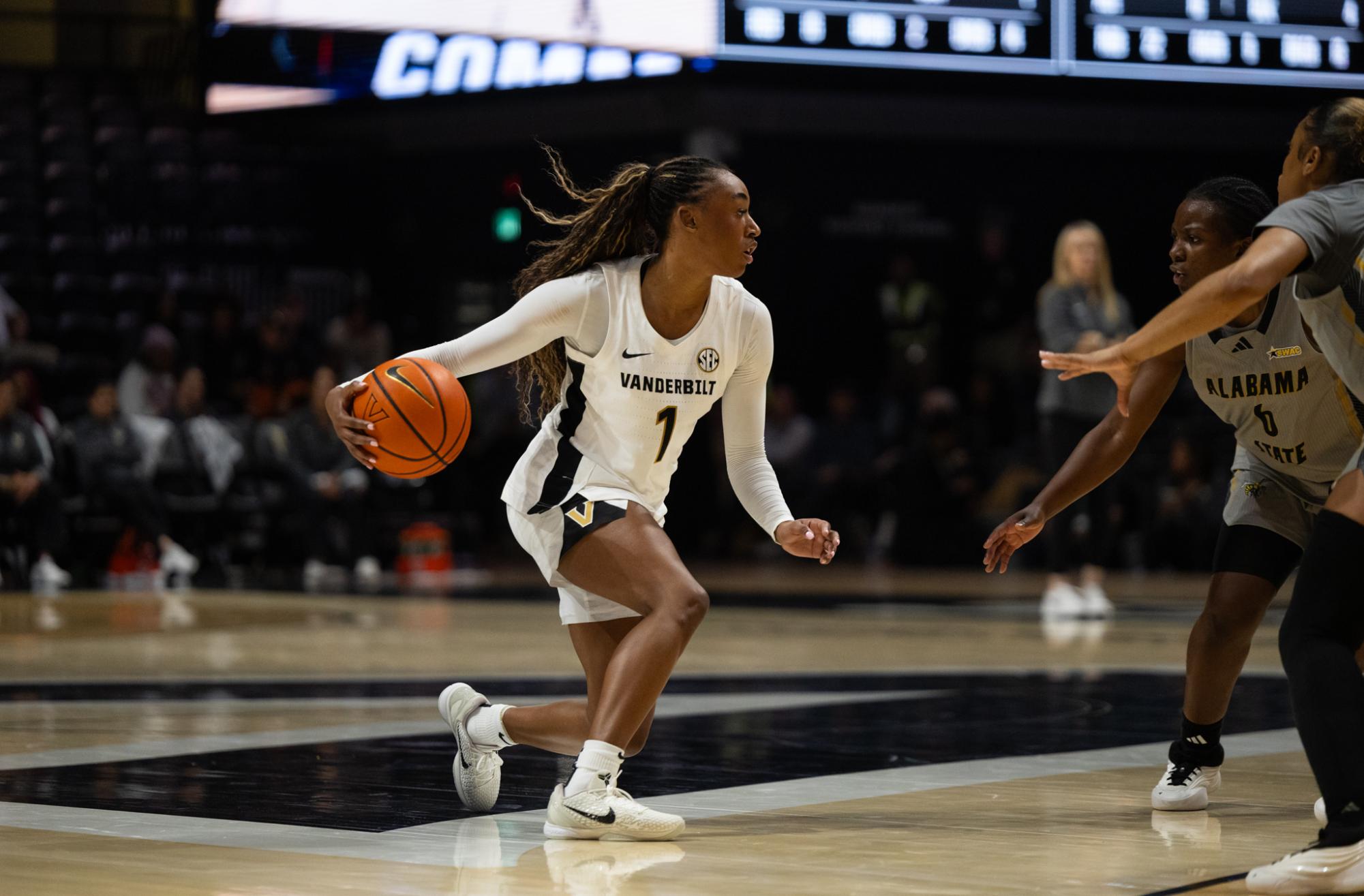
Vanderbilt Women’s Basketball has dominated its nonconference schedule so far, opening with a 6-0 start and beating teams by an average of 42 points. Ranked No. 17 in the AP poll, the Commodores have carried over last year’s momentum and asserted themselves early.
While Vanderbilt’s first stretch of games offered limited resistance, the Paradise Jam will serve as a mild step up — a field filled with recognizable teams that are still rebuilding. The Commodores won’t face true powerhouses, but the tournament will offer a clearer measure of where they stand heading into December.
If Vanderbilt defeats Oregon State in its opening matchup on Nov. 27, it will face the winner of BYU/Virginia Tech in the championship on Nov. 29. Regardless of who awaits it in the second round, that matchup will mark Vanderbilt’s second game this season against a Power Four opponent. Let’s take a look at both the guaranteed matchup and what the Commodores might see in the final.
Oregon State enters the tournament 5-1, but remains a program in transition. The collapse of the Pac-12 forced the Beavers into the West Coast Conference, and the resulting shift sparked a mass departure of players from their 2024 Elite Eight team. Head coach Scott Rueck rebuilt through international recruiting, assembling a roster with 10 players from outside the United States.
The result is a team defined by length and size, especially on the perimeter, where nearly every guard stands 5’10 or taller. That height, paired with a slow, methodical offensive tempo, allows the Beavers to reverse the ball effectively and use both sides of the floor to carve out high-percentage shots. Oregon State leans on 6’8 center Nene Sow, who averages seven rebounds per game. Its most dynamic threat is Tiara Bolden, a long, three-level scorer at 17.8 points per game.
The Beavers’ weaknesses align directly with Vanderbilt’s strengths, though. Oregon State has struggled against pressure this season, posting a 0.84 assist-to-turnover ratio. Against a fast, pressing team like Vanderbilt, these weaknesses could be magnified. The Commodores’ 1.52 assist-to-turnover ratio and sixth-ranked offensive rebounding (19.2 per game) give them the tools to force mistakes, push the pace and take control of the game.
For Vanderbilt, the matchup will hinge on controlling the tempo. First-year point guard Aubrey Galvan (7.5 assists per game, including 15 in her most recent outing) will be central to pushing pace. Simultaneously, Mikayla Blakes (23.2 ppg) and Sacha Washington (7.5 ppg) provide scoring and interior presence. Defensively, Justine Pissott (6’4) and Ndjakalenga Mwenentanda (6’2) will be key to matching Oregon State’s perimeter length.
If Vanderbilt dictates tempo and effectively translates defense to offense, it should have the upper hand — but Oregon State’s size makes the matchup anything but trivial.
Virginia Tech is a familiar name but does not pose the same threat it did two years ago. The Hokies reached the Final Four of the NCAA Tournament in 2023, but coaching turnover and the graduation or transfer of multiple star players triggered a full reset.
Only one player — redshirt junior Carleigh Wenzel — remains from that Final Four roster. She now leads the Hokies in scoring (15.2 points per game) and serves as the focal point of an otherwise inconsistent group. While Virginia Tech still plays with structure and discipline, its ceiling has dipped, and it has struggled to generate consistent offense. This offensive inconsistency was largely responsible for its Nov. 23 loss to James Madison, in which the Dukes held the Hokies to just one field goal in the last 3:36 of the game. Still, the Hokies remain a strong rebounding team, currently ranked No. 11 in Division I in rebound margin (+16.2).
If Vanderbilt faces the Hokies in the final, the Commodores will likely hold the athletic and depth advantage.
BYU enters the Paradise Jam with the profile it traditionally brings: a disciplined half-court offense, methodical pace and strong guard play that forces opponents to execute in the half court. The Cougars excel in the high-low game, with guards looking to dump the ball from the mid-post to bigs in the paint, and they pair that with an active interior defense, averaging 6.3 blocks per game. Their defense is also highly efficient, holding opponents to just 32.8% shooting from the field, demonstrating how well-coached and fundamentally sound this team is.
A Vanderbilt-BYU matchup would pit the Commodores’ athleticism, speed and ability to push the ball against BYU’s deliberate, execution-first approach. If the Cougars hit their perimeter shots and slow the game down, they can turn the contest into a grind. But if Vanderbilt pushes tempo, forces turnovers and converts in transition, its superior speed and depth should carry the day.
Vanderbilt will tip off against Oregon State on Nov. 27 at 7 p.m. CST. If it wins, it will face the winner of BYU vs. Virginia Tech in the finals on Nov. 29 at 11 a.m. CST. Both games will stream live on ESPN+.
The official student newspaper of Vanderbilt University
Your email address will not be published.
Subscribe to Updates
Get the latest creative news from FooBar about art, design and business.
Women’s Basketball: Previewing the Paradise Jam – The Vanderbilt Hustler
Previous ArticleDores Board Great Danes – Vanderbilt Commodores
