




A few years ago, I sat on a panel about the intersection of race, sports and culture with scholars who’d spent their entire careers researching these topics. Eventually, the conversation turned to HBCU athletics. The question: How can Black schools rise to prominence once again? How can they reclaim their position amongst the superpowers of college sports and become viable, if not coveted, destinations for the best Black athletes across the country?
We had no definitive answers, but we understood that any reasonable solution would have to broach the topic of money – specifically, the funds needed to compete with the large, predominantly white institutions (PWIs) of the Power Four conferences.
This was before the advent of NIL and revenue sharing, when schools lured students with state-of-the-art facilities and truckloads of gear, when any money that exchanged hands was slipped discreetly under the table.
At first glance, the gap between HBCUs and PWIs is wider than ever, now that schools and corporations can pay athletes directly – sometimes upward of seven figures. Yet the recent postseason success of a handful of HBCUs suggests a path to college sports parity that may not have to begin with nine-figure operating budgets.
On Mar. 17, the Howard Bisons, winners of the 2026 Mid-Eastern Athletic Conference tournament, faced off against UMBC in a First Four matchup, the winner of which would advance to the round of 64.
The Bisons’ victory didn’t just move Howard into the final bracket. It also marked the first March Madness win in school history.
“I believe that Howard has a brand that is globally recognized, and what has been done on the academic side with so many wonderful alums going out in the world and contributing so much. I really feel that we can replicate that success on the basketball court,” said head coach Kenny Blakeney, who took the Bisons’ reins in 2019.
“We’ve been grinding at it kind of unseen, and we’ve had opportunities in different places to kind of showcase our basketball talent… But being on this stage and being able to check this box… what a wonderful accomplishment.”
Blakeney’s comments sound very similar to what Candice Storey Lee, Vanderbilt Athletic Director, told me this time last year, when I spoke to her just before the 2025 March Madness tournament.
Vanderbilt’s athletics department has plenty of resources at its disposal. But the commonality between Lee’s comments about the Commodores and Blakeney’s after Howard’s historic win comes down to one word: belief.
Lee spoke passionately about her faith that Vanderbilt, long revered for its academic excellence, could be just as dominant in its athletic pursuits – and that faith had shaped the men and women in the offices and locker rooms on West End long before the rest of the world knew what to believe.
Vandy football’s 2024 upset of Alabama may have surprised many, but for Lee, it was simply an external manifestation of an internal certainty.
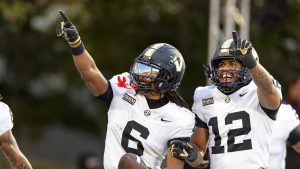
Belief wasn’t just powerful enough to secure the first March Madness wins in team history for both Howard and Prairie View A&M (the Panthers beat the Lehigh Mountain Hawks in their own First Four game on Mar. 18). It was also enough to propel a program back to the tournament after a 32-year absence.
And Tennessee State head coach Nolan Smith didn’t just get his team back to the Big Dance. He did it in about eight months on the job.
Smith was hesitant to take the position when he did, in late July, when basketball rosters were largely set, and a Deion Sanders-style overhaul would be impossible. But he saw enough in the film of returning players that, coupled with his hoops bona fides (Smith was a starting guard on Duke’s 2010 national championship team), turned him into a believer.
“They understand that they’ve done something that is historic, that hasn’t been done in 30-plus years here,” Smith said of his team before their run to the OVC conference tournament title. “All that is fine and dandy, but the main thing is the next thing. These guys, they have a hunger about themselves that I’m excited to see what’s next for them.”
In 2026, that question about what it will take to return HBCU sports to national dominance remains unanswered.
But here’s a sure truth:
It costs nothing to believe. It costs nothing to have a desire to overcome low expectations, to rewrite a national narrative that’s decades in the making, to press forward with the confidence that any story can be revised.
That kind of belief invariably leads to success. When that success shows up in March, people take notice.
And maybe, just maybe, some of those young student-athletes, considering where to spend their college careers, will be the ones paying attention.
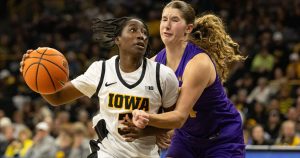
And even after Howard’s loss to Michigan on Mar. 19, or TSU’s to Iowa State on Mar. 20, maybe they’ll believe, too.
Andrea Williams is an opinion columnist for The Tennessean and curator of the Black Tennessee Voices initiative. She has an extensive background covering country music, sports, race and society. Email her at adwilliams@tennessean.com or follow her on X (formerly known as Twitter) at@AndreaWillWrite and BlueSky at@andreawillwrite.bsky.social.