





SUBSCRIBE TO THE DORE REPORT TODAY – CLICK HERE AND GET 50% OFF YOUR FIRST YEAR + a complimentary year of The Athletic
So much for the dog days of the offseason.
With the Brendan Sorsby saga, the opening of the NCAA Baseball transfer portal, and high school recruiting in full swing for Vanderbilt Football, this has been one of the most action-packed offseason weeks I can remember. Let’s dive in, starting with one of the most controversial stories in sports.
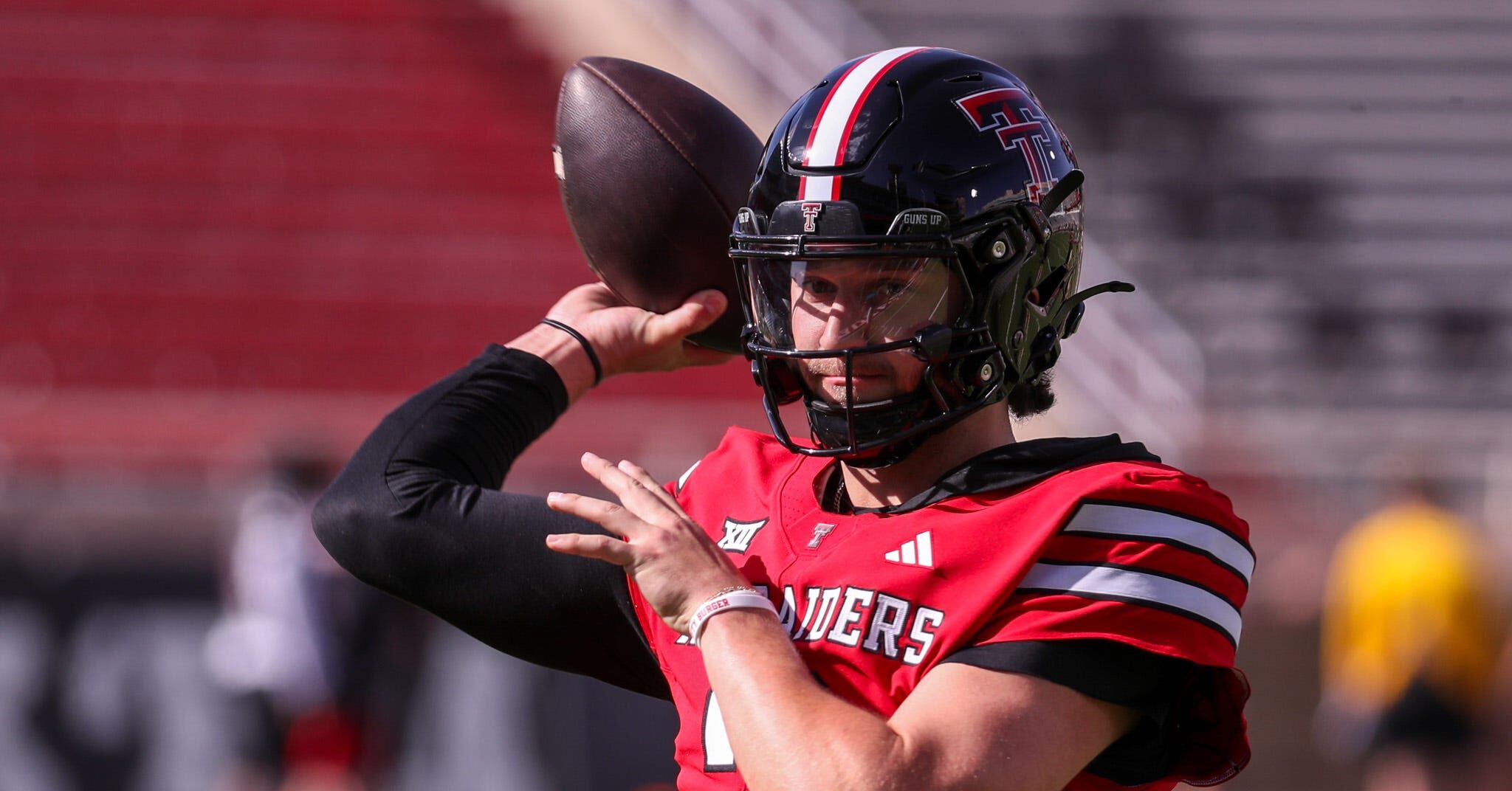
On Monday, some earth-shattering news broke when Texas Tech quarterback Brendan Sorsby was granted a preliminary injunction by a Texas District Court in Lubbock County. After receiving a lifetime ban from the NCAA, Sorsby obtained a preliminary injunction that prohibits the NCAA from taking any action against him during the 2026 Football Season and from punishing Texas Tech. The decision has been the biggest story in NCAA sports this week. It has sparked fierce debate about how NCAA rules should be enforced and whether federal legislation or collective bargaining is the best path forward. After reading the injunction and thinking about the big picture, I’ve laid out my biggest takeaways.
Per the injunction, Brendan Sorsby is eligible to play football this fall. In the Court’s order, the Court found that Sorsby would suffer irreparable harm if he were unable to participate for Texas Tech in the 2026 season. He will be suspended for the first two games of the season and then be eligible to play beginning with Texas Tech’s September 18th game against Houston.
Sorsby’s injunction prohibits the NCAA from punishing Sorsby during the 2026 season. If the NCAA decides to punish him before the conclusion of the 2026 football season, it would be subject to contempt of court and legal action. Based on the order text, any NCAA affiliates, such as the Big 12 Conference or any NCAA member schools, could also be subject to additional legal proceedings if they decide to step in for the NCAA and sanction Sorsby and/or Texas Tech. The reasoning behind that is that Sorsby has been deemed eligible by a court of law. If the NCAA cannot punish Sorsby and/or Texas Tech, the odds are slim to none that the Big 12 or an NCAA member school would be able to punish him.
There’s also an interesting compliance provision of the Order that almost reads like probation conditions. Pursuant to the Court’s Order, Sorsby is to submit a confidential report detailing his compliance with the Order and his continued gambling addiction treatment on the fifth day of each month. If Sorsby violates the Order, the NCAA can petition the Court for emergency relief. I’ll dive into that portion of the Order later, since that specific provision could get complicated.
Sorsby won his motion because the District Court believed he had a substantial likelihood of success on his breach-of-contract and good-faith and fair-dealing claims against the NCAA. In his motion for an injunction, Sorsby argued that he was a third-party beneficiary to a contract between Texas Tech and the NCAA. Ole Miss quarterback Trinidad Chambliss made an argument based on this legal theory in his NCAA medical waiver lawsuit.
Third-party beneficiary cases can get a little complicated. A third-party beneficiary is a party that does not sign a contract but can seek to enforce it because the contract was intended to benefit them and directly benefits them. Unlike standard contract cases, it is difficult to sue a third-party beneficiary for breach because they didn’t sign the contract. However, that doesn’t make Sorsby immune to claims brought by the NCAA. For reasons I will get into later in this article, the NCAA could have raised equitable defenses against Sorsby or brought a third-party beneficiary claim of its own against Sorsby.
In Sorsby’s lawsuit, his attorneys argued that, as a student-athlete playing for Texas Tech, Sorsby directly benefits from the NCAA’s contract with Texas Tech as a third-party beneficiary student athlete. They also argued that the NCAA owes Sorsby duties of good faith and fair dealing. Generally, most contracts have an implied duty of good faith and fair dealing, under which a party to a contract cannot deprive another contracting party or a known beneficiary of the contract’s benefits.
As a student-athlete, Sorsby has access to team and educational facilities, can receive NIL money, and can practice and play in games for Texas Tech as a member of the football program. He fits squarely within the definition of an intended third-party beneficiary. In his pleadings filed with the Court, Sorsby argued that the NCAA breached its contract with Texas Tech because the NCAA failed to consider mitigating factors, such as Sorsby’s mental health, before imposing a lifetime ban for sports gambling. Further, Sorsby argued that by failing to consider his diagnosed gambling addiction, the NCAA failed to engage in good faith and fair dealing with him.
During the hearing, the NCAA attorneys admitted that the NCAA did not consider mitigating factors such as Sorsby’s gambling addiction diagnosis when it issued a lifetime ban. While I disagree with the Court’s decision, I think this was a stupid move by the NCAA. Rules are in place for a reason, and the NCAA has a history of not following its own rules.
Because the order is a District Court order, there is no written decision. It is unclear exactly how and why the judge reached his conclusion. Additionally, Lubbock County’s District Court does not maintain a public docket, making it nearly impossible to locate the documents filed with the Court. The reason Sorsby’s injunction was allowed appears to be that the NCAA failed to follow its own rules process before imposing a lifetime ban on Sorsby. Whenever a preliminary injunction is granted, it means that the Court agreed with the moving party’s arguments. So, while we don’t know the exact reasoning, we do know the Court found Sorsby’s arguments persuasive, and Sorsby’s arguments about how the NCAA unfairly applied its rules were one of his major arguments.
I’ve seen a lot of hot takes and misinformation online following the Sorsby decision. There are a few common misconceptions about this decision that I would like to clear up. Here are some of the most glaring misconceptions that I have seen.
The first is that the Sorsby decision constitutes legal precedent. That is not true. The Sorsby decision is a pre-trial ruling by a District Court judge. The decision is non-binding, meaning other courts don’t have to follow it in the future. In our legal system, state District Courts do not have the power to issue binding opinions. Sorby’s case is a decision on a motion made by a single judge. While still significant, it is important not to overstate its legal impact.
Another misconception is that Sorsby’s case is over. While Sorsby does get to play this season, the case is not over. His trial is scheduled for February 8, 2027. The NCAA is filing an appeal, a process that will take several months. It is possible that the NCAA could win its appeal. Because of how long the appellate process can take, Sorsby could play the entire season and still lose his case. Sorsby won the battle, but the war remains ongoing.
A third common misconception I’ve read is that the Protect College Sports Act could have prevented Sorsby’s lawsuit. That is incorrect. Sorsby sued the NCAA on a breach-of-contract theory. The Protect College Sports Act exempts the NCAA from antitrust lawsuits. Antitrust lawsuits are those in which players accuse the NCAA of unfairly restricting trade and commerce. Sorsby’s case is not an antitrust suit. His lawsuit centers on the NCAA’s enforcement process. In its current form, the Protect College Sports Act, if passed, would allow similar lawsuits like Sorsby’s to continue. But what if federal legislation banned all player lawsuits? Right now, the best way to eliminate all player lawsuits is through a collective bargaining agreement or a written agreement in which athletes would waive their right to sue. A bill that would take away an entire group of adults’ right to sue without any written agreement would probably not hold up in court.
One of the most common misconceptions I’ve seen about the Sorsby decision is the belief that the NCAA cannot punish players for sports betting. Sorsby’s case against the NCAA concerns the NCAA’s rule-enforcement process. The NCAA still can punish players for sports betting. Players would have to petition the courts, as Sorsby did, to obtain any relief. It is not a guarantee that players in similar circumstances would win, especially given the public outrage following the granting of Sorsby’s injunction. Sorsby’s injunction is only specific to him and Texas Tech and does not prevent the NCAA from punishing players from other schools who engage in similar behavior. Please keep that in mind when you see hot takes like this online.
Overall, the biggest misconception I’ve seen about the Sorsby case involves retribution. I’ve seen a lot of posts online that teams playing Texas Tech this season should schedule other teams in 2026 to punish Texas Tech. That would most likely violate the Court’s order, which prohibits the NCAA from retaliating against Texas Tech or Sorsby during the 2026 season. Similarly, a school or conference seeking to step in for the NCAA to punish Sorsby and Texas Tech would face legal action and likely face an injunction. Now, some NCAA programs have been toying with the idea of boycotting Texas Tech beyond 2026. If NCAA programs were to do so, they would need to wait until the Sorsby Order expires. While Texas Tech could still file a lawsuit in those circumstances, the chances of success would become murkier because the Order would no longer be in effect. In short, any adverse action taken before the end of the 2026 NCAA Football season would expose the NCAA and its member schools to a series of lawsuits.
Before NCAA athletes are allowed to compete in an academic year, they are required to complete and sign Student-Athlete Statement Forms. These are signed agreements by NCAA athletes indicating their eligibility to compete. By signing, they affirm that they have not knowingly violated any NCAA rules, including involvement in organized gambling activities related to NCAA and professional sports under NCAA by-laws (listed in the form as sports wagering). If an athlete has violated NCAA rules, these violations must be disclosed. This form functions as a contract between the NCAA and its athletes, in which athletes agree to follow certain rules in exchange for receiving eligibility from the NCAA. As the governing organization, the NCAA has a duty to enforce its rules on player conduct and eligibility fairly. Players confirm that they have reviewed these rules and understand them before signing the Student-Athlete Statements.
https://www.ncaa.org/sports/2013/11/19/division-i-compliance-forms.aspx
Sorsby’s case has a clear problem under basic contract law. Generally speaking, there are two major concepts when separate parties accuse one another of breaching a contract. Those concepts are which party breaches the contract first and whether the breach is material (translation: how big the breach is and whether it undermines the entire basis of the contract). Several jurisdictions follow the principle that when one party materially breaches a contract first, the breaching party cannot seek enforcement of the contract and may be barred from recovery. Based on my research, Texas law also follows this legal principle.
Based on Sorsby’s timeline, he intentionally breached multiple Student Athlete Statements dating back to his time as a student at Indiana by engaging in sports gambling and betting on his own team. Even worse, Sorsby acted in bad faith by failing to disclose his numerous gambling violations when he signed Student-Athlete Statements over multiple seasons before 2026. This material breach of the Student-Athlete Statements occurred first, and prior to the NCAA imposing a lifetime ban against him.
Under this basic breach-of-contract analysis, Sorsby should be barred from recovery against the NCAA. He signed an agreement stating that he understood and agreed to comply with all NCAA rules. Still, he intentionally breached that agreement and took active steps to conceal his breach through a scheme involving proxy bets placed by friends and family. These actions should bar Sorsby from enforcing NCAA rules because of his own bad-faith and intentional conduct.
In opposing Sorsby’s lawsuit, the NCAA must have included Sorsby’s signed Student-Athlete Statements, which are collected by Athletics Directors and given to the NCAA. If I were the NCAA’s attorneys, I would use the Student Athlete Statements signed by Sorsby as the basis for an appeal. Under this theory, the NCAA could win on appeal. I would be shocked if the NCAA did not mention the Student-Athlete Statements or submit copies of these documents in any of its pleadings filed with the Court.
When I look at the Court’s order granting Sorsby’s injunction, I see a major potential legal flaw. The flaw involves a seminal principle in matters of equitable relief. If I were the NCAA, I would have immediately raised the “doctrine of unclean hands” in response to Sorsby’s lawsuit. If argued, it could kill Sorsby’s case.
In matters involving equitable relief, there is a foundational principle known as “the doctrine of unclean hands.” The doctrine of unclean hands states that “those who seek equity must act equitably.” In other words, a party seeking equity must come to court with clean hands regarding their lawsuit. It is a common defense to lawsuits and can prevent a plaintiff’s recovery when a plaintiff seeking equitable relief from a court is found to have acted inequitably in connection with the lawsuit. Texas law follows this legal principle. And if Texas law did not apply to the contract between the NCAA and Texas Tech by some chance, the doctrine of unclean hands would likely apply to whichever state law governs the contract. This legal concept is taught in every single law school and is a bedrock principle of equitable relief in the United States.
Brendan Sorsby sought a preliminary injunction. An injunction is a form of equitable relief in which a Court orders a party not to do something. The NCAA could have made a compelling argument that Sorsby acted inequitably by intentionally betting on his own team and sport before he sued the NCAA. By his own statements and affidavits, Sorsby admitted to intentionally betting on NCAA sports until he went to a rehab facility around April 2026. This behavior not only violates NCAA rules but is also unethical because it compromises the integrity of NCAA Football. This conduct is also likely illegal (for reasons I will get into below) and is directly related to Sorsby’s lawsuit. To avoid detection by the NCAA, Sorsby intentionally sent money to friends and family to place bets on his behalf, concealing his conduct. And several of those bets were placed on his own team.
Under this analysis, Sorsby’s hands are dirty due to misconduct directly related to his lawsuit, and he should not receive the benefit of equitable relief from a Court. Because the doctrine of unclean hands is one of the most common defenses to a lawsuit, I would be shocked if the NCAA didn’t raise this defense in opposition to Sorsby’s request for an injunction. If the NCAA decided not to raise this issue, I think it would be a major tactical mistake because it would waive one of the NCAA’s strongest arguments against Sorsby in any appellate proceedings. To make an argument on appeal, the argument must have been raised before a lower court.
If the NCAA were wise enough to raise the unclean hands defense in the District Court, that could be its golden ticket to winning on appeal.
When thinking about Sorsby’s lawsuit against the NCAA, I thought of a counterargument the NCAA could have raised against him. Admittedly, this argument is not as strong as the unclean hands doctrine defense. Still, this legal theory could have helped the NCAA if it had been raised as an argument.
One common strategy when defending lawsuits is to use an opposing party’s own arguments against them. This is extremely common in contract cases where one party accuses another of acting in bad faith. In his request for an injunction, Brendan Sorsby argued that he was an intended third-party beneficiary of the NCAA’s contract with Texas Tech, a member institution, and that the NCAA breached its contract with Texas Tech and acted in bad faith. Conversely, the NCAA could have raised that same argument against Sorsby.
Here’s how the NCAA could have argued its third-party beneficiary claim against Sorsby. Under Texas law, a party is a donee third-party beneficiary (a third-party beneficiary who can enforce a contract) when the party does not sign the contract but is specifically identified in it and in connection with the contract’s performance. Another instance in which a third-party beneficiary exists is when the circumstances show that the promise in the contract will directly benefit the third party.
https://www.wilsonlegalgroup.com/litigation/third-party-beneficiaries-of-contracts
I think the NCAA could have checked all those boxes by arguing that it is a third-party beneficiary of a contract between Sorsby and Texas Tech. First, one of Sorsby’s NIL deals is a revenue-sharing agreement with Texas Tech. NIL revenue-sharing deals between universities and players regularly mention the NCAA, NCAA eligibility, and include conditions about complying with NCAA rules.
Sorsby’s revenue-sharing contract with Texas Tech also identifies the NCAA in connection with Sorsby’s performance of the contract. Sorsby is agreeing to get compensated by Texas Tech for his name, image, and likeness because he is an NCAA Football player. Sorsby’s contract is entirely contingent on his participation in NCAA activities as a member of the football program.
Lastly, I think a compelling argument could have been made that the NCAA directly benefits from Sorsby’s revenue-sharing agreement with Texas Tech. Texas Tech is not only an NCAA member institution, but every game Sorsby will play in for Texas Tech is an NCAA Football game. The NCAA directly profits from airing Texas Tech games and makes more money the higher Texas Tech is ranked, due to the school’s size and strong alumni base. As an eligible player, Sorsby wears apparel that is NCAA-approved, participates in practices pursuant to NCAA rules, and has to maintain minimum academic standards to participate in NCAA Football. All of those things directly benefit the NCAA in addition to the direct financial benefit it receives from Texas Tech’s contract with Sorsby, who was among the most sought-after quarterbacks in the transfer portal.
If the NCAA argued that it is a third-party beneficiary to Sorsby’s NIL deal, Sorsby could have a major problem on appeal under basic contract law. Under this analysis, Sorsby intentionally bet on his own sport and on his own team well before the NCAA issued a lifetime ban against him. As is customary in NIL deals with schools, NCAA players agree to abide by NCAA rules. Sports gambling is among the most serious rule violations that a player or coach can commit. An NCAA player engaging in sports gambling on their own team undermines the integrity of the NCAA, which prides itself on fair competition.
Using this theory, when Sorsby bet on his own sport and his own team, he committed a material breach of his contract with Texas Tech and acted in bad faith by taking steps to conceal his conduct. The NCAA could make a compelling argument that Sorsby should be barred from enforcing Texas Tech’s contract with the NCAA because he breached a closely related contract with his own school well before receiving his lifetime ban.
If the NCAA raised this argument in opposing Sorsby’s motion for an injunction, it could make for an intriguing appeal. Generally, to have a viable appeal, an argument must be raised before a lower Court. While I think the NCAA’s strongest argument is the doctrine of unclean hands (especially because it is such a common defense), the NCAA’s third-party beneficiary argument, if raised, could help demonstrate that Sorsby intentionally breached an NCAA -related contract well before the NCAA decided to impose a lifetime ban against him.
Brendan Sorsby has admitted to transferring money to friends and family to place sports bets. In other words, betting by proxy. Not only did Sorsby bet by proxy, but some of his wire transfers crossed state lines. This is where he could face criminal charges.
The Federal Wire Act, also known as 18 U.S. Code, section 1804, specifically prohibits interstate wire transfers used for sports betting. A violation of the Federal Wire Act can result in a fine or up to two years in federal prison.
While he has not yet been charged, Sorsby’s conduct likely violated the Federal Wire Act. Sorsby admitted that he continued to place online sports bets after he transferred to Texas Tech and that he sent money to friends and family to do so. Online sports gambling is illegal in Texas, so Sorsby’s bets at Texas Tech would have needed to cross state lines. Depending on where his friends and family were located while he was at Indiana and Cincinnati, it is possible that he violated the Federal Wire Act while at those two institutions as well. At the very least, he faces potential criminal exposure for his actions while at Texas Tech, which would involve multiple counts based on the separate times he gambled.
While Sorsby’s injunction includes the NCAA, all member institutions, and affiliates, it does not protect him from criminal charges. Based on the public outrage and Sorsby’s own statements and affidavit, he could face criminal charges. Whether the federal government decides to do that is another story. At the very least, it would certainly be a wild turn of events if Sorsby were arrested and/or indicted.
Texas Tech may never recover from its decision to support Brendan Sorsby and allow him to be part of the football program.
Its Athletic Director, Football Coach, and administration have unanimously defended Brendan Sorsby. This is a new low in NCAA Sports. Football coaches, ADs, and university administrators have defended athletes for misdeeds in the past, but Sorsby is a first. Never before has a school publicly stood by an active player who admitted to intentionally betting on his own team and sport. Sorsby broke the most important rule that an NCAA player can break. Instead of cutting ties, Texas Tech is looking the other way. It is shameful and outrageous.
Some recent statements by Texas Tech’s Athletics Director highlight how ridiculous Texas Tech’s position is. Kirby Horcutt issued a statement this week, claiming that there is no perfect answer for Sorsby’s situation, that Texas Tech is focused on Sorsby’s mental health, and that Sorsby’s continued presence on the football team is crucial to his recovery. Kirby, please.
Do you think Texas Tech would be standing behind Sorsby if he were not a starting quarterback with a $5 million NIL Deal? Hell no. If Sorsby were low on the depth chart or fighting for a roster spot, he would be kicked off the team by now.
Horcutt’s statement appears to be a PR stunt and is misleading. What I find really appalling is his audacity to claim that Texas Tech’s role is to support Sorsby’s recovery. How is paying a gambling addict 5 million dollars supporting a person’s recovery? How is keeping someone with an impulse-based addiction in a high-pressure environment where they might relapse supportive? How is returning a sports gambling addict to a sports-centric environment beneficial to that person’s mental health? How is Texas Tech protecting Sorsby when the noise will only turn up whenever he makes his debut?
With all the money Texas Tech is paying Sorsby, it’s a question of when, not if, he makes his debut. In the NIL era, the stakes are higher than ever in NCAA Football. Texas Tech has made its decision about what matters most. Its decision to stand by Sorsby suggests it prioritizes winning and money over integrity. Never forget that when you watch Texas Tech play any sport. I feel awful about the athletes on the teams who did nothing wrong and have been put in this position by ineffective leadership. Those players are going to receive a lot of hate that they don’t deserve.
Sorsby’s ability to recover does not require playing football. If Texas Tech truly cared about Sorsby, it would put him far away from a football field, in an environment where he could get the help he needs. The University’s statements about supporting people with mental health problems make a mockery of the addiction recovery process.
There’s one component of Sorsby’s injunction that hasn’t been discussed enough this week. And it is the gigantic elephant in the room. What if Brendan Sorsby relapses this fall and bets on his own team again?
Sports gambling is everywhere. Gambling addictions have high relapse rates. This spring may not be Sorsby’s only trip to a rehabilitation program. The path to recovery for many people with an addiction is long and not linear. Sorsby is going to be battling his gambling addiction for the remainder of his life. With how young he is, that is an incredibly long road ahead.
Sorsby’s relapse would be an absolute nightmare for all involved. It would call into question every game he plays in for Texas Tech (which will already be under scrutiny). Texas Tech would have to deal with the repercussions of giving an athlete with a gambling addiction a second chance and getting burned. The NCAA would have to race back to the District Court to file for emergency relief.
The question of emergency relief available to the NCAA if Sorsby relapses is murky. What would the emergency relief look like? The District Court has already ruled that the NCAA cannot punish Sorsby during the 2026 season. Would the Court reexamine its order and the merits of Sorsby’s claims? A relapse could drastically damage Sorsby’s credibility before the Court. Would the Court add to his suspension? Would the Court reverse its injunction? Would Sorsby receive some sanction from the Court?
There are no easy answers to the question of what happens if Sorsby relapses. That should frighten anyone who is an NCAA Sports fan. Even if Sorsby were punished for relapsing, the damage would already be done. Games would be compromised, and more irreparable damage would be done. It would make an already awful situation even worse. The risk of Sorsby relapsing is exactly why it was so dangerous to grant his injunction in the first place.
When I think about the long-term impact of the Sorsby decision, one thought that I keep coming back to is how damaging his lawsuit is for future players suing the NCAA. Unfortunately, some critics of Sorsby have used his lawsuit to paint players as a whole in a negative light. It’s unfair to lump Diego Pavia, Trinidad Chambliss, and other players involved in NCAA lawsuits with Sorsby.
Sorsby has crossed a line that no other active player has in NCAA sports. He has admitted to intentionally betting on his own sport and team and has demanded to be deemed eligible. The lawsuits involving Diego Pavia, Trinidad Chambliss, and others don’t even come close to that kind of misconduct. None of those athletes gambled.
While I am on the NCAA’s side in Sorsby’s case, the NCAA is not a heroic organization. It is a greedy, private organization that has refused to adapt and change its rules, which violate federal antitrust law. Diego Pavia had a legitimate claim against the NCAA because its JUCO rule unfairly punished JUCO players while preserving all eligibility for prep school players, even though JUCO and prep school teams regularly play each other. Trinidad Chambliss’ case concerned a medical redshirt, which the NCAA has inconsistently granted for decades. Even if you don’t believe Chambliss was actually injured as a Division II athlete, the NCAA has a long track record of acting unfairly in these cases.
The NCAA deserves to be held accountable for when its rules break the law. Sorsby’s case is an abuse of the legal process by a player who intentionally violated NCAA rules and acted to conceal his misconduct. While the player is in the wrong in Sorsby’s case, we shouldn’t be so quick to dismiss other player-led lawsuits.
We should be asking questions like “Is there some injustice with the NCAA’s rule?, “Is the NCAA breaking the law?” or “Has the player engaged in any misconduct that should prevent them from playing?”
There will be additional lawsuits by players against the NCAA. We should support the players whose claims have merit.
As the dust settles in the Sorsby fallout, there are a few storylines to pay attention to. Does the decision give the Protect College Sports Act any momentum? Does Sorsby relapse? When does Sorsby return to Texas Tech? Does the Big 12 risk legal action and try to sanction Sorsby? Will conferences such as the Big Ten and the SEC use this decision to try to bargain collectively with their athletes? All of these storylines, however resolved, highlight the mess that NCAA Sports finds itself in.
Sports gambling addiction is an epidemic in America. Sorsby won’t be the last player to bet on his own team. When this case first came to light, I was confident that the judge would make the right decision, and it seemed like an easy one. But clearly, that’s not the case.
I hope other schools use Brendan Sorsby as a cautionary example and that his appeal is denied. I also hope that Texas Tech does not make the Big 12 Championship or the College Football Playoff. One of the worst things that could happen would be for Texas Tech to become a contending team this season and be rewarded for its massive moral shortcomings.
For now, America has a new set of villains to hate this upcoming season. The vitriol and rage Texas Tech and Sorsby are going to face this season will be unlike anything we’ve seen in a long time. Imagine if Pete Rose got to come back the following season to manage the Reds following his gambling scandal. Then add in smartphones, football, easily accessible gambling apps, and a player who happens to play the most important position on the field. What could go wrong?
The powers that be in NCAA Sports have had so many opportunities to fix things, and I wish they would with sport-specific collective bargaining agreements. I still think it remains the best option available for the NCAA. To date, those in leadership positions have not met those expectations. This week, Texas Tech and a District Court judge facing reelection in Lubbock County failed us. These failures trump all others so far, but not far behind are the NCAA and the politicians who believe federal legislation will be a magic pill to cure the NCAA of its litany of ailments.
The one thing that makes sports great is the uncertainty of outcomes. It separates sports from the WWE, movies, and theatre. Brendan Sorsby is a direct threat to that integrity and the NCAA’s foundational principle of fair competition. Now that he’s able to play, we can only hold our breath and hope that the circus does not get any worse.
This week, Tim Corbin made multiple additions through the transfer portal.
The Vandy Boys have added Missouri infielder Blaize Ward, Maryland outfielder and former two-sport athlete Bud Coombs, Wofford outfielder Niko Brini, and South Carolina pitcher Riley Goodman. And there could be more players on the way. TDR’s own Alex Kurbegov and Colin Bryant have done great breakdowns of these guys on the Message Board, so my analysis will be a little more big picture.
This offseason, Vanderbilt needed to replace Braden Holcomb, Logan Johnstone, and Mike Mancini. With the power potential, speed, and athleticism of Ware, Coombs, and Brini, I think Vanderbilt has made several solid high-floor adds to build back from the losses of Holcomb, Johnstone, and Mancini. All of these players could start next season and could benefit from working with Jason Esposito.
On the pitching front, Riley Goodman intrigues me. Vanderbilt didn’t have enough flamethrowers in its bullpen last year. Goodman’s strikeout total of 25 strikeouts over 22 innings is impressive. One thing that does make me a little nervous is that he’s coming off Tommy John surgery. With Scott Brown’s recent track record of pitcher injuries, I think Goodman will need to be carefully managed. But if Brown and Corbin can find a way to rein in his ERA (8.59 at South Carolina), he could be a strong asset out of the bullpen.
Moving forward, I would like to see Corbin target some starting pitchers in the transfer portal. I think if he can add a couple of arms, it would go a long way towards strengthening the Achilles Heel of his 2026 team.
This week, Clark Lea got another football commit from three-star safety Dillon Davis. As discussed on this week’s podcast, Davis is a notable commit from St. John Bosco, a California High School program known as a local powerhouse. At 6’1, 185, I like Davis’ size.
Safety, corner, and receiver are three positions where you can never have too much depth, and I look forward to watching him in Vanderbilt’s secondary. Davis’ commitment demonstrates Vanderbilt’s growing national appeal, and if it can begin recruiting more West Coast players, that will only improve on-field production in the years to come. Keep an eye out for more commits as Lea has had a flurry of recruits visit campus recently.
This week, Vanderbilt Football released its time windows for the TBA times listed on its schedule. There are several notable ones.
Auburn on September 26th is an afternoon game. October 10th against Ole Miss is a flex game. Arkansas on October 17 is a flex game. Georgia on October 3, Alabama on November 14, and Florida on November 21 are all early games. The games against Kentucky on October 24, Mississippi State on November 7, and Tennessee on November 28 are night games.
As a die-hard Vandy Football fan, I must say that I love the amount of flex and night games on the schedule. I remember the days when Vanderbilt could only hope for an afternoon game at best because the program was so bad. It’s amazing how the last couple of seasons have changed the perception of the program. There is still some work to be done, but seeing those time slots was a nice boost. Having a night game against Tennessee is a great setup. I’ve got that one in particular circled as it could be an intriguing battle of two freshman quarterbacks to end the regular season.
It may only be June, but football season will be here before we know. At the moment, don’t mind if I daydream about the schedule and a night game following a Lot 2 tailgate.
That’s a wrap on this week’s TDR Tidbits. As always, don’t hesitate to reach out if there is a topic you would like me to cover
SUBSCRIBE TO THE DORE REPORT TODAY – CLICK HERE AND GET 50% OFF YOUR FIRST YEAR + a complimentary year of The Athletic
Click Here to go to TDR’s all new store
NIL Store
Visit Nil.Store/DOREREPORT15 and use code DOREREPORT15 at checkout for 15% off your order
Great NIL gear from your favorite Vanderbilt athletes
Rhoback
Click Here to shop for Vanderbilt gear on Rhoback.com
Use Code VAN20 for 20% off your first order
Will Byrum and Trevor Hulan are back for episode 370 and joined by TDR insider Alex “Scoop-Gawd” Kurbegov for segments one and two. The fellas give…
In the third edition of TDR Tidbits, the dog days of the offseason slog onward. With a bit of a slow news cycle this week, here are a few tidbits…
SUBSCRIBE TO THE DORE REPORT TODAY – CLICK HERE AND GET 50% OFF YOUR FIRST YEAR + a complimentary year of The Athletic Raise your hands if you’ve…
Will Byrum and Trevor Hulan are back for episode 369 of The Dore Report. The fellas open the show by discussing Vanderbilt football’s recent 2027…
In this second edition of TDR Tidbits, I get into Tyler Tanner, NCAA legal issues, SEC Commissioner Greg Sankey, a new proposed NCAA bill, and Luke…
On episode 368 of The Dore Report, Will Byrum and Trevor Hulan are back to talk Vanderbilt athletics, the end of the VandyBoys’ historic postseason…
Now that we’re officially in the offseason for Vanderbilt’s major sports, I’m debuting TDR Tidbits, a periodic offseason column. In TDR…
SUBSCRIBE TO THE DORE REPORT TODAY – CLICK HERE AND JOIN FOR 50% OFF + a complimentary year of The Athletic In desperate need of a series win last…
Will Byrum and Trevor Hulan are back for Episode 363. The guys open the show by breaking down Vanderbilt football’s spring game, including stats,…
Will Byrum and Trevor Hulan return for Episode 362 of The Dore Report. The guys begin with Vanderbilt men’s basketball, discussing the lack of…
SUBSCRIBE TO THE DORE REPORT TODAY – CLICK HERE AND JOIN FOR 50% OFF + a complimentary year of The Athletic One day before the NCAA Men's Basketball…
Will Byrum and Trevor Hulan return for Episode 361 of The Dore Report. The guys begin with Vanderbilt basketball as the transfer portal officially…
Will Byrum and Trevor Hulan are back for Episode 360. The guys open the show by breaking down Mark Byington’s contract extension and what it means…
As Vanderbilt fans, we are often predisposed to focus on the negative. We’re conditioned to hone in on all the things that have gone wrong and what…
Players sign up to put their bodies on the line and risk significant injuries. If you compete in any collegiate sport and get through your career…
Another week, another set of legal battles for the NCAA. Whether in state or federal Court, the NCAA is fighting tooth and nail and refusing to…
“Be wary of Greeks bearing gifts” – Virgil, the Aeneid. “Be wary of the NCAA making professional eligibility statements” – Your favorite Masshole,…
Yesterday, Judge William Campbell issued a decision on the Patterson players’ Motion for Preliminary Injunction in the Redshirt Rule case. For those…
Will Byrum and Trevor Hulan are back for episode 349 to give the latest on Vanderbilt football’s transfer portal activity. Will and Trevor recap all…
by George Barclay and Blake Fromang American College Basketball. International Basketball. The National BasketballAssociation G League. Thanks…
SUBSCRIBE TO THE DORE REPORT TODAY – CLICK HERE AND JOIN FOR JUST $1 + a free year of The Athletic Since 2018, it has been legal to bet on College…
Today sucks. Yesterday sucked. This whole process has just 100% sucked. Vandy getting robbed of a playoff spot and Diego Pavia (likely) not…
Since Vanderbilt is on a bye week this week, it might be a good time to take a look at some hot topics in the world of NIL and NCAA legal issues.…
Will Byrum and Trevor Hulan are back for episode 337 to preview Vanderbilt’s upcoming matchup against #17 LSU. Will and Trevor give a full stat…
As reported by On3’s Thomas Goldkamp and Pete Nakos on Tuesday night, several active NCAA players including Vanderbilt linebacker Langston Patterson…
© 2026 On3 Media, Inc. All rights reserved. On3 is a registered trademark of On3 Media, Inc.


